


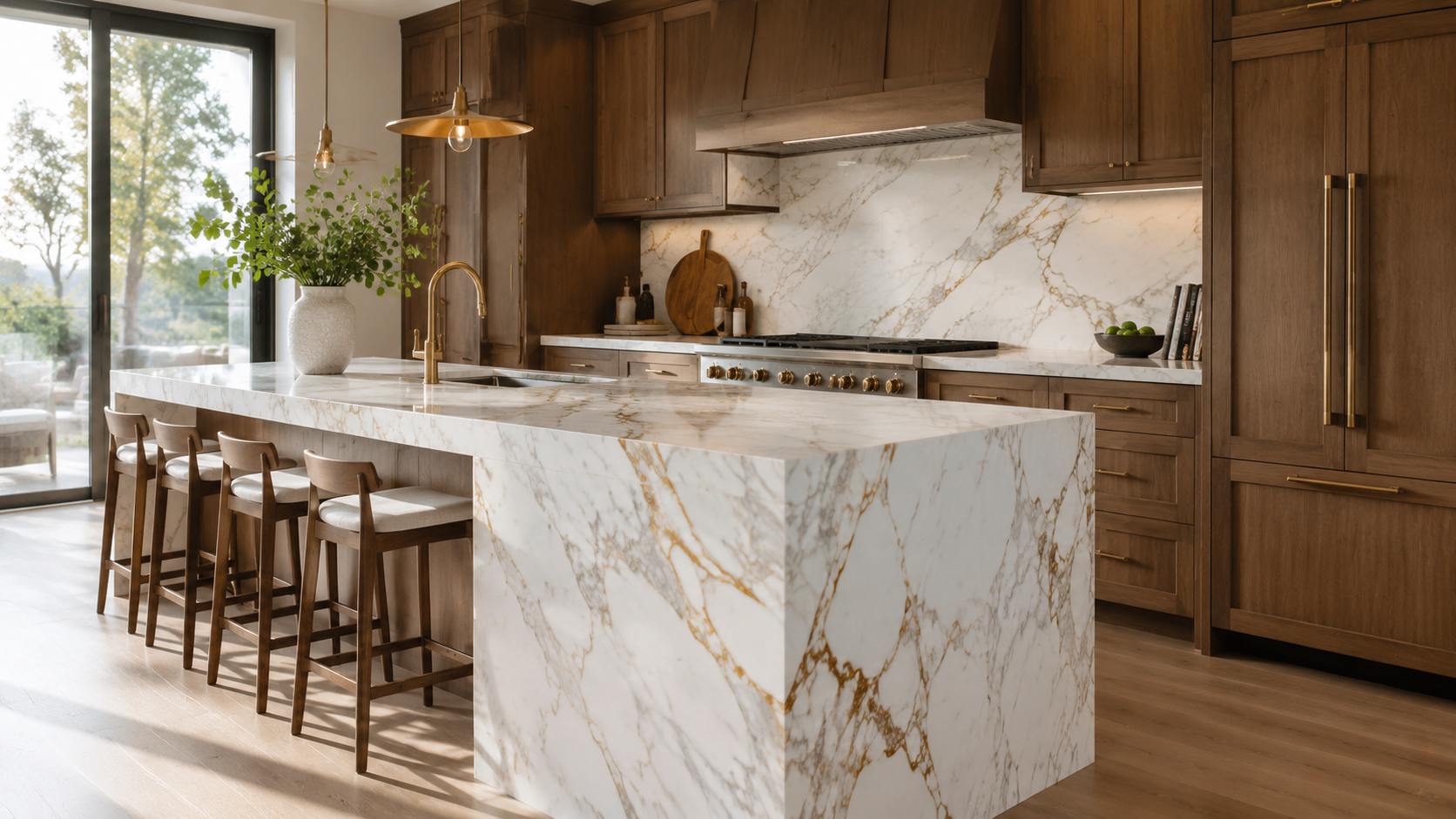
Selecting Stone Surfaces in Interiors
Selecting surfaces for a property is a fundamental step. Stone materials are widely recognised for their durability across both natural and engineered options. For property owners, architects, and builders collaborating with Terraway Stone, focusing on standard characteristics ensures a reliable installation that aligns perfectly with long-term project goals.
Understanding the Core Material Types
When planning a renovation, the surface decision usually comes down to two primary categories of stone, each offering distinct physical characteristics and aesthetic benefits:
Natural Stone: Materials such as marble, granite, and quartzite are quarried directly from the earth. According to geological standards outlined by the Natural Stone Institute, every natural slab possesses unique veining and colour variations due to the specific mineral conditions present during its formation, making natural stone ideal for bespoke features. Additionally, to view premium natural examples, you can browse the curated Terraway Stone Products catalog.
Engineered Stone: These are manufactured surfaces created by combining crushed quartz with resin binders. Modern manufacturing standards across Australia now emphasize low-silica alternative formulations to ensure workplace safety. Consequently, engineered options offer uniform patterns and structural reliability, making them a popular choice for high-traffic installations.
Key Technical Considerations for Selection
According to industry insights from prominent building bodies like the Housing Industry Association (HIA), choosing a surface involves assessing practical performance factors:
Porosity and Stain Resistance
Natural stones are inherently porous and generally require professional sealing upon installation, as well as periodic resealing to help prevent liquid absorption. Conversely, engineered stone options typically provide a non-porous finish, making them highly resistant to standard household stains.
Heat Exposure
While natural stones possess excellent heat tolerance, engineered stone contains resin binders that can be sensitive to extreme temperatures. Therefore, standard industry guidelines recommend using trivets or heat pads to help avoid thermal shock or permanent discoloration from hot cookware.
Maintenance Requirements
Regular cleaning with pH-neutral soap and warm water is widely recommended across all stone types. However, acidic cleaners or abrasive scrubbing pads should generally be avoided, as these products can cause etching on natural surfaces and dulling on engineered finishes.
Aligning with Your Project Goals
Ultimately, the right choice depends on the specific daily demands of your space. Natural stone provides an organic, high-end appeal that ages beautifully, meanwhile, engineered options offer practical predictability and ease of maintenance. In conclusion, to explore standard material profiles and view a diverse selection of slabs suited for your next layout, consider visiting the official Terraway Stone Website or contact us directly.
Sources:
Housing Industry Association (HIA) – Kitchen and Bathroom Planning Guidelines
Natural Stone Institute – Dimension Stone Design Manual for Maintenance and Installation
Disclaimer:
The information published in this blog is intended for general informational purposes only. While every effort has been made to ensure the accuracy of the content, it should not be considered professional architectural, engineering, construction, or installation advice. As every project is unique, readers should seek advice from a qualified professional before making decisions relating to product selection, installation, or construction.