


Application Standards and Colour Trends for Stone Surfaces
Stone surfaces play a consistent, foundational role in contemporary interior design. From residential kitchen renovations to large-scale commercial fit-outs, the integration of durable stone products helps define both the functionality and aesthetic tone of an environment. Premium suppliers like Terraway Stone offer a variety of standard materials that seamlessly align with classic design principles and current Australian building practices.
Standard Applications in Modern Architecture
Design frameworks, such as those highlighted by the Australian Institute of Architects (AIA), emphasise utilising durable materials in specific high-impact zones. Consequently, this practice can help to maximise long-term property longevity.
Kitchen Benchtops and Islands
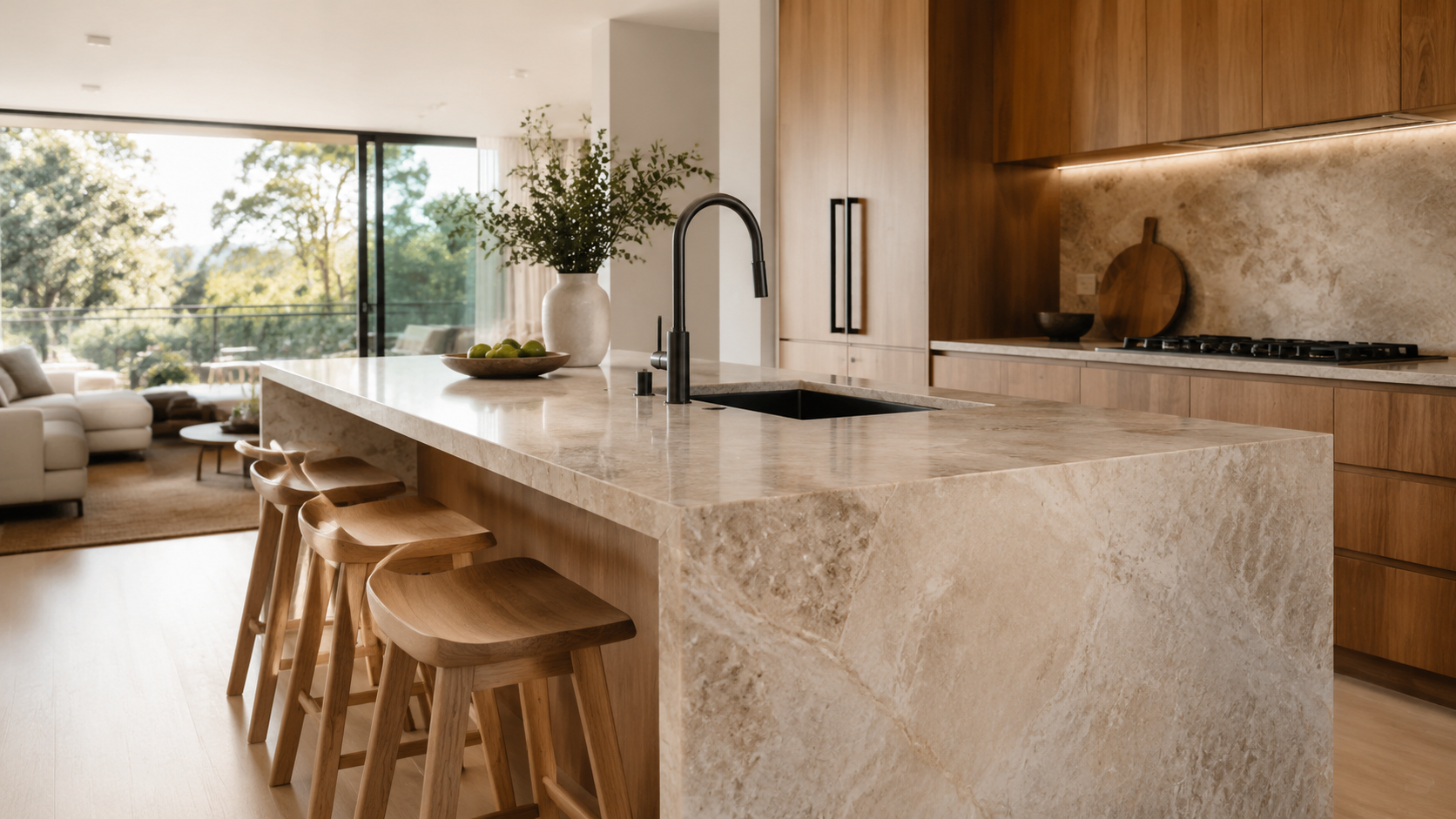
The kitchen remains a primary focal point for premium stone installations. Beyond simple aesthetics, stone benchtops serve a highly functional role. Additionally, designing with a “waterfall edge” is a popular method used to showcase the material’s continuous grain and dramatic veining. This specific setup extends the stone slab vertically down the sides of the cabinetry to the floor, turning a workspace into a visual architectural anchor. You can see how these configurations come together by exploring the Terraway Stone Projects gallery.
Feature Walls and Splashbacks
Utilising a single, continuous slab of stone for splashbacks or full-height feature walls has become a common standard. This application minimises grout lines, providing a cleaner, more streamlined look that can significantly reduce the areas where moisture, grease, and dirt accumulate over time. When used across open-plan spaces, these expansive surfaces draw the eye upward and celebrate the raw, geological character of the stone.
Bathroom Vanities and Wet Areas
Stone surfaces are frequently specified for wet areas due to their structural integrity. When properly sealed, natural stone or engineered alternatives provide an easily sanitised surface that can reliably withstand daily exposure to humidity, water splashes, and cosmetic products. Integrating stone into custom vanities or shower recesses introduces an organic texture that contrasts beautifully with smooth glass and chrome tapware.
Selecting Timeless Colour Profiles
Current design preferences reported across major residential fit-out guides, including resources from the Master Builders Association (MBA), show a steady demand for flexible, neutral palettes. These choices remain popular due to their ability to outlast changing seasonal decor trends.
Soft Whites and Greys
These tones remain a popular, low-risk choice for sustaining long-term property appeal. They complement changing paint colours and furniture styles over the decades, acting as a neutral yet sophisticated canvas for any modern space. By reflecting natural light, white and grey profiles also help to make more compact interiors feel open and airy.
Warm Earth Tones
Materials like travertine, limestone, or warm-veined stones are increasingly sought after in contemporary layouts. They bring an organic, grounding feel to minimalist spaces, which effectively softens the sharp lines of modern black or metallic fixtures. These earthy selections connect indoor living zones seamlessly with outdoor alfresco spaces.
Planning for Your Next Project
When incorporating stone into an architectural design, working with a reliable supplier can help ensure that the material selected matches the specific structural capacity and aesthetic intent of the building. To review standard colour profiles and high-quality material choices that align with your upcoming layout, consider exploring the complete stone inventory available at Terraway Stone.
Sources
- Australian Institute of Architects (AIA) – Materials and Sustainability Resources
- Master Builders Association (MBA) – Residential Fit-Out and Finishes Guide
Disclaimer:
The information published in this blog is intended for general informational purposes only. While every effort has been made to ensure the accuracy of the content, it should not be considered professional architectural, engineering, construction, or installation advice. As every project is unique, readers should seek advice from a qualified professional before making decisions relating to product selection, installation, or construction.